by Jamie A. Thomas
Does Language Make a Difference? Political Operatives Seem to Think So.
Language plays a big role in how we perceive key ballot issues and political candidates. Just this month, a Florida insider used the phrase "political jiu-jitsu" to describe the way their team had manipulated the wording of a ballot measure supported by Big Energy, to sound as though it's pro-solar, when in fact, it aims to curb the growth of the solar panel industry.
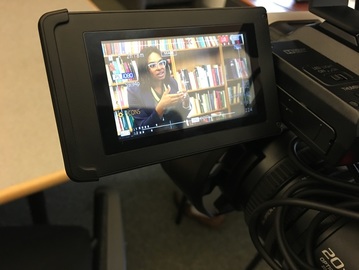
A couple of weeks ago, when I was asked to do an interview with PBS about the presidential candidates' use of language, it pushed me to think more concretely about my observations this election cycle. In this interview that will air on Election Day, I shared my thoughts on how Secretary Clinton and Mr. Trump use language to connect with specific voter audiences, and pivot to issues they each feel most strongly about. Specifically, I mentioned how the candidates differ when it comes to talking about status groups. In my view, this is another form of strategic language use, signaling imagery which connects differently for voters, by (de)valuing certain status groups and societal priorities.
A couple of weeks ago, when I was asked to do an interview with PBS about the presidential candidates' use of language, it pushed me to think more concretely about my observations this election cycle. In this interview that will air on Election Day, I shared my thoughts on how Secretary Clinton and Mr. Trump use language to connect with specific voter audiences, and pivot to issues they each feel most strongly about. Specifically, I mentioned how the candidates differ when it comes to talking about status groups. In my view, this is another form of strategic language use, signaling imagery which connects differently for voters, by (de)valuing certain status groups and societal priorities.
Who Are "The African Americans"?
The African Americans doesn't exist because Black people in the U.S. are not a monolith. Where Clinton refers to "African Americans", "Latinos", and "Muslim Americans", Trump opts to distance himself from these groups using the article the, in addition to more etic wording. When Trump has said "the African Americans", or "the Blacks", for example, he has also associated the phrase with mentions of rampant violence, "inner cities", and lawlessness. The distancing effect of his language imparts a sense that these groups are formally homogenous, and gives some voters the impression that he has less investment in these communities, and limited, overall trustworthiness.
The second presidential debate included a moment where the candidates responded to a question from a town hall participant concerned with the way American Muslims are being perceived. Clinton addressed the participant as a "Muslim American", and Trump used the moment as an opportunity to focus on "Radical Islam". When Trump later mounted an attack by saying that Clinton was "avoiding" the phrase he preferred, he was falsely equating the two, and obfuscating the power of language in defining and characterizing the issue. This was a move Clinton attempted to disarm by describing his position as playing right into the hands of extremists. Their exchange during the second debate underscores how each of the candidates has strategically invested in using phrasing to amplify their ideological positioning.
The second presidential debate included a moment where the candidates responded to a question from a town hall participant concerned with the way American Muslims are being perceived. Clinton addressed the participant as a "Muslim American", and Trump used the moment as an opportunity to focus on "Radical Islam". When Trump later mounted an attack by saying that Clinton was "avoiding" the phrase he preferred, he was falsely equating the two, and obfuscating the power of language in defining and characterizing the issue. This was a move Clinton attempted to disarm by describing his position as playing right into the hands of extremists. Their exchange during the second debate underscores how each of the candidates has strategically invested in using phrasing to amplify their ideological positioning.
Does Hillary Clinton Talk More Like a Man to Ward Off Donald Trump?
No, actually my thinking is that Clinton has largely been just as consistent in her use of language, as has her opponent. What the public is responding to is the media's focus on her being a woman, and Trump's own rhetoric towards her, which often highlights her femininity or unmanly-ness, by referring to her pointedly as "she" and "her", continually describing her role as Bill Clinton's wife, and most notably, as a "nasty woman".
Even before the election cycle, media attention was focused on Clinton's style of dress, haircuts, and former role as First Lady. Clinton was referred to as a woman in so many ways before her being a woman began to feature in election coverage, and surface substantially in her own campaign.
In this sense, our obsession with Clinton's biology doesn't necessarily mean that she sounds like a woman. More likely, it means that we think she sounds like a woman, because we construct her as such, and because we arguably have two centuries invested in the presidency as an exclusively masculine achievement. A phallic over-reliance on big sticks has convinced us that only a man can bring the necessary objectivity and aggressive strength we think the role of commander in chief demands. My guess is that if she becomes president, it will necessitate a shift in our media's description of her administration's policies, and our own collective investment in heteronormative male authority. In some ways, this has already been attempted in tv dramas like The Last Ship, Madam Secretary, and Commander in Chief, but some might argue these shows don't go far enough, and often these female presidents (and their likenesses) are portrayed as highly flawed.
Even before the election cycle, media attention was focused on Clinton's style of dress, haircuts, and former role as First Lady. Clinton was referred to as a woman in so many ways before her being a woman began to feature in election coverage, and surface substantially in her own campaign.
In this sense, our obsession with Clinton's biology doesn't necessarily mean that she sounds like a woman. More likely, it means that we think she sounds like a woman, because we construct her as such, and because we arguably have two centuries invested in the presidency as an exclusively masculine achievement. A phallic over-reliance on big sticks has convinced us that only a man can bring the necessary objectivity and aggressive strength we think the role of commander in chief demands. My guess is that if she becomes president, it will necessitate a shift in our media's description of her administration's policies, and our own collective investment in heteronormative male authority. In some ways, this has already been attempted in tv dramas like The Last Ship, Madam Secretary, and Commander in Chief, but some might argue these shows don't go far enough, and often these female presidents (and their likenesses) are portrayed as highly flawed.
Even Though Both Candidates Are White, Could Race Still Make a Difference?
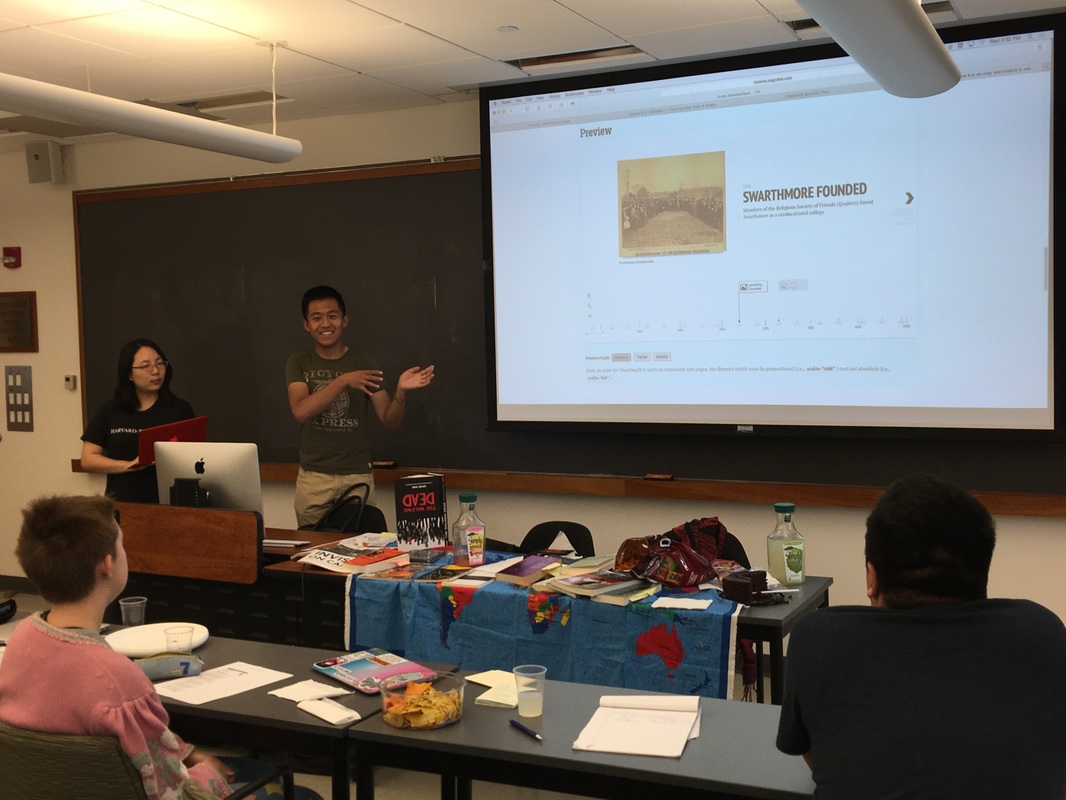
Yes. Last week in our sociolinguistics class, we hosted author of Voting Hopes or Fears? White Voters, Black Candidates and Racial Politics in America, political scientist Keith Reeves (Swarthmore College), to talk more about the polarized discourse of this election season, and what we might expect to happen when voters mark their ballots on November 8. We learned that narratives of social desirability have a lot to do with how candidates are perceived, and that hidden racial animus can motivate voters to report preference for candidates they don't actually intend to vote for. Prof. Reeves reminded us that even though we have two major candidates who are both White, our election is still occurring in a highly racialized context.
In my view, one only need look to the latest Saturday Night Live skit, "Black Jeopardy" in which Tom Hanks plays Doug, a likely Trump voter wearing a red Make-America-Great-Again-hat. As fellow Black contestants answer questions that draw upon low-class cultural stereotypes and speech patterns of African Americans, along with their Black Alex Trebek, they're increasingly surprised to find they share opinions with Doug's White, hillbilly persona. However, as the skit progresses, Doug increasingly refers to his counterparts as "you people", and seems scared when Black Alex Trebek approaches him for a hug, though he at one point considers the game show host his "berr-other".
In my view, one only need look to the latest Saturday Night Live skit, "Black Jeopardy" in which Tom Hanks plays Doug, a likely Trump voter wearing a red Make-America-Great-Again-hat. As fellow Black contestants answer questions that draw upon low-class cultural stereotypes and speech patterns of African Americans, along with their Black Alex Trebek, they're increasingly surprised to find they share opinions with Doug's White, hillbilly persona. However, as the skit progresses, Doug increasingly refers to his counterparts as "you people", and seems scared when Black Alex Trebek approaches him for a hug, though he at one point considers the game show host his "berr-other".
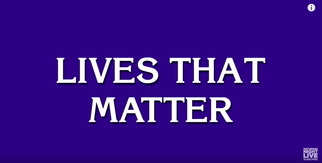
The skit concludes with a question on Lives That Matter, and Black Alex Trebek sums up their ideological differences by addressing the hillbilly contestant thus: "Well, it was good while it lasted!" (I should add that SNL is only able to piece together a skit like this because they finally have more than two Black actors on their cast.)
Recently, I've been working with my students to specifically examine moments from the third presidential debate. As a result, my students have been honing methods of sociolinguistic analysis as they work on persuasive op-eds we will post to this blog in coming days. If you're still on the fence about who you'll vote for, perhaps our reasoned examinations of the candidates' use of language will help you towards a decision.
Recently, I've been working with my students to specifically examine moments from the third presidential debate. As a result, my students have been honing methods of sociolinguistic analysis as they work on persuasive op-eds we will post to this blog in coming days. If you're still on the fence about who you'll vote for, perhaps our reasoned examinations of the candidates' use of language will help you towards a decision.


 RSS Feed