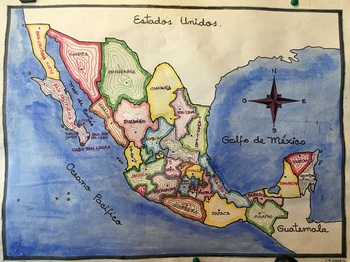
 In this blog post, I share what I've learned about why people on both sides of the border are invested in the outcomes of the 2016 U.S. presidential election. I'm just returning from two months in Mexico, where 1 out of every 6 people I talked to had lived and worked in the U.S. Our many conversations throughout the summer have helped me to more clearly see why terms like illegal immigrant and Hispanic are simply not nuanced enough to capture the growing cultural and economic reality in which we all live. Born in Texas, poet and Chicana activist Gloria Anzaldúa (1942-2004) has described the space inhabited between English and Spanish, between American and Mexican identity, as the Borderlands. The commingling of English and Spanish in Anzaldúa's celebrated poetry underscores the hybrid identity, or third space, she and others like her inhabit. Here, I explore the stories of two bilingual people I met during my summer in Mexico. To live in the Borderlands means knowing Encountering Bilingual Identity in Rural Mexico.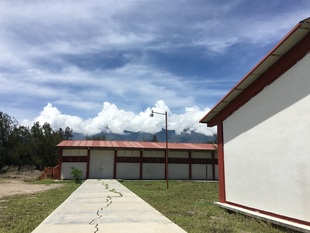 Mountaintops rise behind the school's campus. I began my summer working one-on-one with wonderfully motivated students at their high school in Tlacolula, a rural town in central Oaxaca state. Dotted with newly planted trees, the campus was tucked between agricultural fields and defunct railway lines. It may have been the edge of town, but from the school's soccer field, there was a beautiful view of the cloud-covered mountain range that encircled the valley. The temperate climate reminded me of central California--dry enough for cactus and agave, but not so dry that corn, tomatoes, and squash couldn't grow in abundance.
Turning away from the mountain view, I walked into the school to being assisting freshmen and sophomores in improving their English. That first day, I was surprised to meet quite a few that had been born in the States. Now teenagers, they spoke English more comfortably than their peers, recalling early years in Los Angeles city schools, and their favorite American foods and primetime TV. Many hoped to return to the U.S. to pursue their college education, as childhoods across the border had left them feeling more American at times than Mexican.
0 Comments
|
Main AuthorJamie A. Thomas, PhD, is a linguistic anthropologist, educator, and faculty development leader. She is Lead Coach for Open for Antiracism (OFAR) and a Lecturer in Linguistics and TESOL at California State University, Dominguez Hills, and she writes here about language, race, and popular culture. Archives
November 2026
Categories
All
|
 RSS Feed